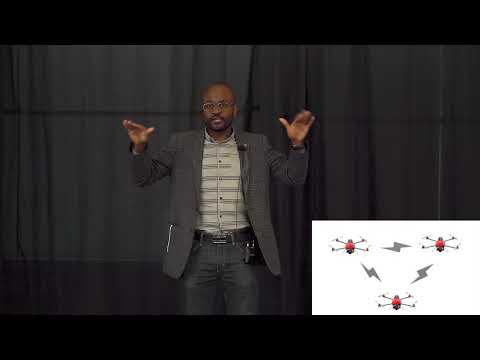
This research improves drone-based search and rescue by creating networks of communicating drones that optimize data routing. Inspired by traffic flow, it minimizes delays by avoiding congested paths. Faster data transmission enables quicker detection and response, allowing larger areas to be searched efficiently and increasing the chances of saving lives.

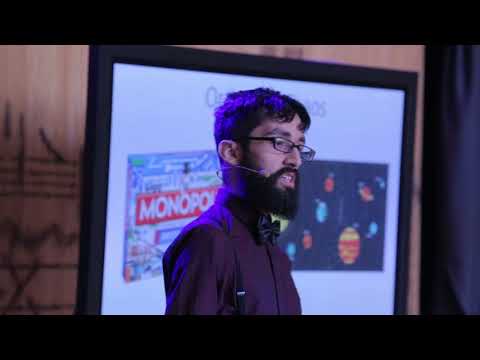
This research quantifies the uncertainty in chaotic systems, showing why long-term predictions — from planetary motion to weather patterns — become unreliable. By developing mathematical models that capture chaotic behaviour, the work supports applications in traffic flow, wireless communication, climate forecasting, and disease spread, revealing why some systems are inherently more predictable than others.

This research explores how to secure low-power Internet of Things devices using physical-layer security. Instead of relying on computational cryptography, it harnesses randomness in wireless communication channels to achieve strong or even perfect security. As 5G expands device numbers, understanding these mathematical limits is essential for protecting future networks.