
This research investigates how communication between the heart and brain influences cognition and mental health. By studying heart rate variability, vagus nerve activity, and neural oscillations, it reveals a direct effect of heart rhythms on brain function, offering new insights into schizophrenia, mental illness, and body-based therapeutic interventions.

This research applies fluid mechanics, numerical simulations, and machine learning to model the brain’s waste-clearance system during sleep. By investigating how fluid moves through brain tissue and how aging or injury affect this process, the work aims to identify strategies for preventing or slowing neurodegenerative diseases such as Alzheimer's.
2026
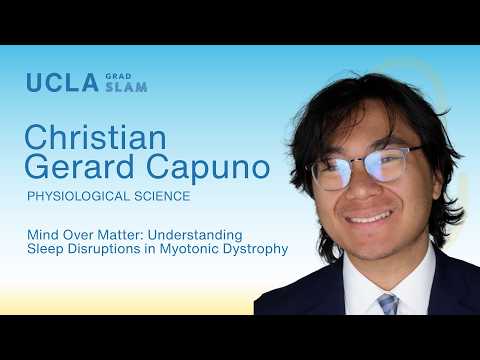
This research investigates the neurological causes of sleep dysfunction in people with myotonic dystrophy, a common multisystem muscular dystrophy. Using mouse models and brain activity monitoring, the study examines how diseased brains lose the ability to compensate for stress, providing new insights into sleep quality, cognition, and disease progression.

This research develops a method to deliver EGCG, a green tea compound known to break apart Alzheimer's-related protein tangles, into the brain. By chemically attaching EGCG to a carrier that can cross the brain's protective barrier, the project aims to create a potential therapeutic strategy for slowing memory loss and disease progression.

2026
This research investigates mating behavior in Siamese fighting fish and reveals that visual interaction dramatically increases reproductive success. By studying 203 breeding pairs, the project demonstrates the importance of sight in social and mating behavior, suggesting that betta fish possess more sophisticated visual and individual recognition abilities than previously understood.

This research investigates how the olfactory system of the Spanish ribbed newt adapts between aquatic and terrestrial environments. By analyzing cellular and genetic changes in the nose, the study reveals remarkable sensory plasticity, offering broader insights into nervous system flexibility and potential implications for understanding neurodegenerative diseases such as dementia.

2026
This research investigates how differences in butterfly behavior relate to brain evolution and memory. Heliconius butterflies showed superior long-term memory and enlarged mushroom body brain regions compared with related species. The work explores how neurogenesis shapes cognition and may ultimately contribute to understanding memory, brain development, and neurological disorders.
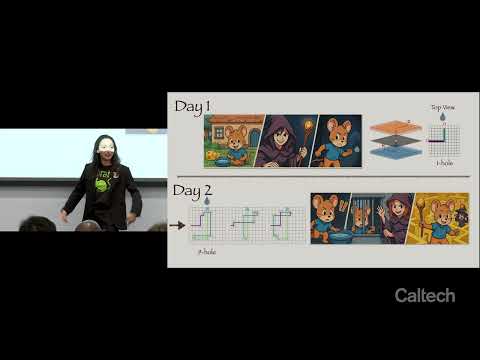
This research uses the Manhattan maze to study rapid learning and memory in mice. The study demonstrates that mice can acquire complex navigation sequences after only a few rewards, retain memories overnight, and generalize learned strategies to new mazes. The findings provide insights into few-shot learning, memory formation, and adaptive intelligence.

This research investigates the physiological signature of presence by linking heart rate patterns to states of embodiment and attention. Using movement meditation, self-reports, and continuous heart monitoring, it aims to identify the “heartbeat rhythm” of presence. The findings could support technologies that promote emotional regulation, mindfulness, and human connection.

2026
This research investigates the role of force feedback in virtual reality training. By comparing users with and without haptic feedback, it examines effects on brain activity, skill acquisition, and real-world performance. The study aims to improve VR training systems by incorporating sensory input essential for effective motor learning and skill transfer.