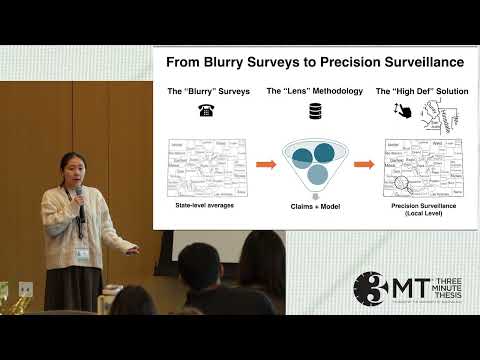
This research uses wearable data and AI to detect disease earlier by analyzing continuous health signals rather than isolated clinical snapshots. By personalizing models to individual baselines, the system identifies subtle changes linked to conditions like infections, heart issues, and mental health crises, enabling earlier intervention and potentially saving lives.
2026
This research uses machine learning to predict trauma demand and optimise hospital scheduling. By forecasting patient volume and dynamically allocating operating rooms, it reduces cancellations, improves efficiency, and lowers costs. The system has the potential to transform healthcare delivery by balancing emergency and elective care more effectively.

2025
This research explores next-generation digital twins—virtual representations of real-world systems that support decision-making through simulation and AI. By combining decentralization, privacy-preserving architectures, explainable AI, and scenario analysis, the work aims to help individuals and organizations evaluate alternative futures, make informed decisions, and build more transparent intelligent systems.