
Using honeybee communication and disease defense as a framework, this research explores how early warning signals can improve wildlife conservation. By examining indicators of ecosystem health, climate-driven parasite dynamics, and preventative monitoring strategies, it argues that detecting subtle ecological changes early is essential for protecting biodiversity and ecosystem resilience.

This research develops a high-resolution chemical method for analyzing tree rings to reconstruct past climates and ecosystem responses. By measuring atomic-scale chemical variations within cellulose molecules, the study separates environmental signals from biological responses, enabling more detailed understanding of historical climate change, plant physiology, and long-term ecosystem adaptation.

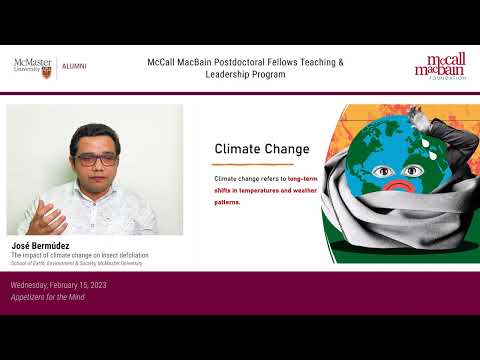
This talk explains how climate change can increase insect-driven defoliation by raising insect activity, survival, and range expansion. It argues that defoliation threatens forests, crops, and food security, and shows how remote sensing and machine learning can help detect outbreaks early, support monitoring, and guide policy and prevention efforts.

Climate change is forcing marine species to migrate across hostile coastal environments. Using environmental DNA from seawater, this research demonstrates a powerful new way to detect and monitor biodiversity, revealing hundreds of species per sample. eDNA offers a scalable, sensitive tool for tracking ecosystem change and guiding conservation in rapidly changing marine environments.

Feathers and blood preserve detailed biological records of Tītī stress, diet, and environment across both New Zealand and the North Pacific. By analysing hormones and stable isotopes in modern and historical samples, this research reveals how climate change affects Tītī populations and identifies which groups are most vulnerable, guiding future conservation efforts.