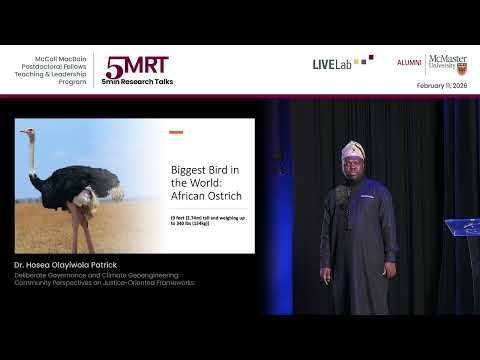
This research examines climate geoengineering through a justice-oriented, community-based governance framework. It argues that while geoengineering has global implications, risks and vulnerabilities are unevenly distributed. Emphasizing deliberative…
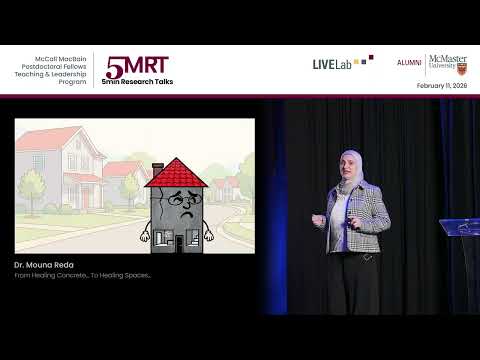
My research develops self-healing concrete by embedding polymer capsules containing healing agents that release when cracks form. Using experiments and computational modeling, the work identifies optimal capsule designs that survive concrete mixing…
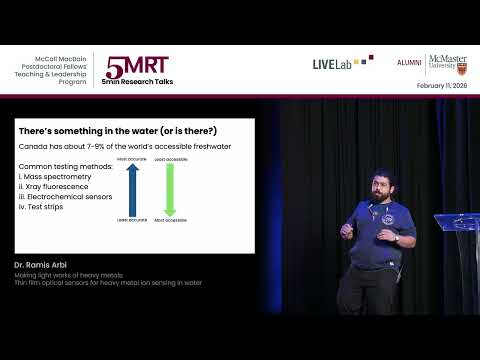
Heavy metals in drinking water pose serious health risks, yet current testing methods often require laboratories or lack accuracy. This research develops optical sensors called optodes that use light-responsive dyes to detect contaminants. The goal…
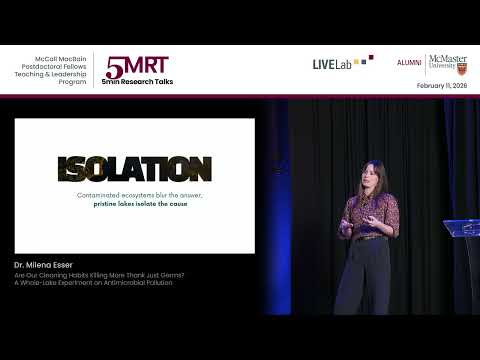
Quaternary ammonium compounds (QACs) are common disinfectants that enter waterways through household products. Researchers are studying their ecosystem effects using a whole-lake experiment in Canada’s Experimental Lakes Area. By examining microbial…
Type 1 diabetes affects skeletal muscle, accelerating age-related strength loss and slowing recovery from injury. This research examines whether standard exercise guidelines improve muscle health and metabolic function in individuals with type 1…
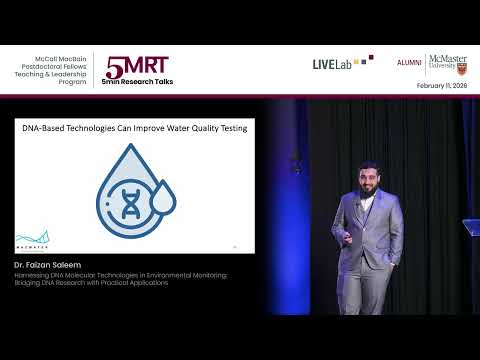
This research improves water and clinical diagnostics by replacing slow culture-based methods with rapid DNA-based detection. It enables faster, more accurate identification of pathogens, comprehensive microbial profiling, and tracing of…
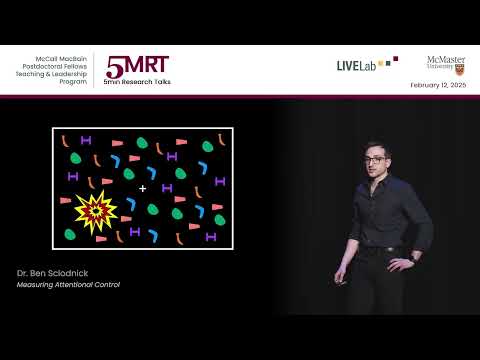
This research investigates attentional control by isolating experience-driven effects from goal-driven and saliency-driven attention. Using controlled visual search tasks, it demonstrates how prior experience biases perception and response times.…
This research examines multimorbidity among individuals with opioid use disorder, revealing that one in three patients has multiple chronic conditions. Using longitudinal health data, it identifies disease clusters and clinical risks from treatment…
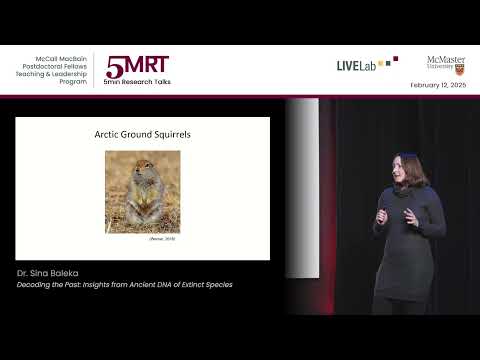
This study uses ancient DNA to investigate the hybrid origins of Colombian mammoths. By analyzing 700,000-year-old DNA from Arctic ground squirrel middens, it finds no early hybridization, helping refine evolutionary timelines. The research…