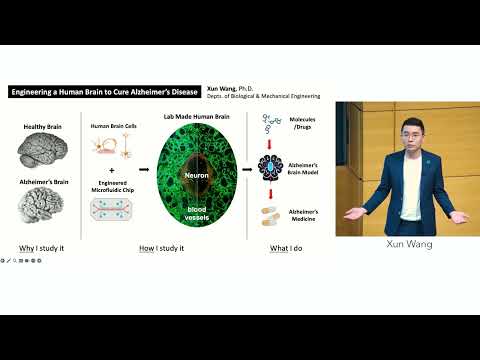
This research develops one of the most advanced human-engineered brain models to better study Alzheimer’s disease and test treatments. Using microfluidic chips containing all key brain cell types, blood-vessel systems, and Alzheimer’s-model neurons, the project enables efficient drug testing, personalised disease modelling, and the possibility of replacing animal testing in the search for a cure.

This research focuses on developing reliable blood-based biomarkers to evaluate new treatments for hereditary frontotemporal dementia. By identifying an imbalance between two key molecules, progranulin and prosaposin, the work aims to provide accurate measures of treatment effectiveness and bring hope to families carrying this devastating genetic condition

This research maps how drugs travel from the cerebrospinal fluid into the brain, offering an alternative to the blood–brain barrier for treating Alzheimer’s disease. Using mouse models, the study identifies specific drug-entry routes and differences in drug penetration, paving the way for targeted, efficient therapies guided by a “Google Brain Map” of delivery pathways.
Learning a new language, even later in life, can boost attention within a single week and support long-term cognitive resilience. Intensive language learners outperform peers in non-language courses, with benefits spanning ages 18–78. Practising five hours weekly maintains gains, offering a promising, accessible strategy for stroke recovery and dementia delay.

2025
My research uses AI and wearable technology to track brain and body signals such as brain waves (EEG), heart rate, and movement. The goal? Spotting early signs of Alzheimer's and Parkinson's before symptoms show up. Catching these subtle changes could mean helping people sooner, letting them enjoy the everyday moments that matter most
This research tests a new personalised care model for Parkinson’s called Prime Care, offering rapid access to support and tailored interventions based on each patient’s risk of hospital admission. A two-year clinical trial of 214 participants will determine whether this approach improves wellbeing and reduces costly, harmful hospital stays.